Autism Disorders Types: Current ASD Classifications, Levels, and Old Labels Explained
People search for autism disorders types because the language around autism can feel surprisingly inconsistent. One article may list Asperger's syndrome, another may list three ASD levels, and another may mention rare terms such as childhood disintegrative disorder or Rett syndrome. The cleanest way to read all of this is simple: autism is currently grouped under autism spectrum disorder, while many older names still appear in school records, family conversations, and search results. If you are using this topic to organize observations, an autism traits self-reflection resource can be a gentle first step, but it cannot replace a formal clinical evaluation.
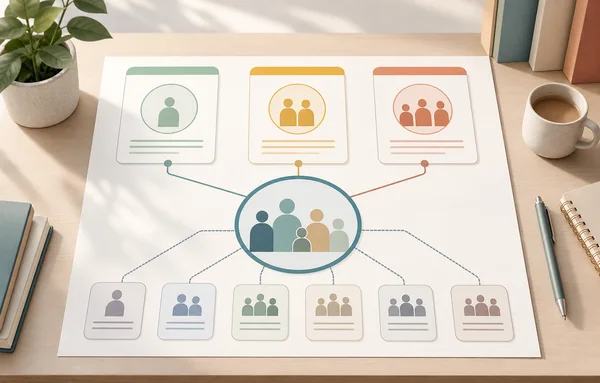
The Short Answer: ASD Is One Spectrum, Not Seven Official Types
The most useful answer is that autism spectrum disorder is one current umbrella classification, not a set of seven official types. The word "spectrum" matters because autistic people can have very different combinations of communication style, sensory needs, routines, interests, learning profile, language, motor differences, and daily support needs.
Current clinical language usually describes ASD through two main lenses. The first lens is the core pattern: differences in social communication and interaction, plus restricted or repetitive behaviors, interests, routines, or sensory responses. The second lens is support need, often described as Level 1, Level 2, or Level 3.
Older terms still matter because many people received them before the current umbrella language became standard. Asperger's syndrome, autistic disorder, PDD-NOS, and childhood disintegrative disorder are examples of historical names. Rett syndrome is often found in old "5 types" lists, but it is now understood primarily as a distinct genetic condition that can share some overlapping features with autism.
So when you see lists of "3 types," "4 types," "5 types," or "7 types of autism," treat them as language maps rather than fixed categories. Some are historical, some are informal, and some combine support levels with older labels.
Why Lists Mention 3, 4, 5, or 7 Types
Search results often disagree because they answer different versions of the question. A parent may ask how many types of autism there are because they want a quick explanation. An adult may ask because they heard the term Asperger's. A student may want a types of autism spectrum disorder PDF for a school handout. Each intent tends to produce a different list.
What the "3 Main Types" Usually Means
When people ask about the 3 main types of autism, they often mean the three ASD support levels:
| Current level language | General meaning | Important caution |
|---|---|---|
| Level 1 | Requires support | Needs may be less visible, but still real |
| Level 2 | Requires substantial support | Daily communication, flexibility, or sensory support may be more consistent |
| Level 3 | Requires very substantial support | Support may be intensive across communication, safety, learning, or daily living |
These levels are not personality types. They are broad support descriptors, and a person's needs can look different across home, school, work, relationships, and stressful seasons.
What the "4 Types" Usually Means
Four-type lists usually refer to DSM-IV-era labels: autistic disorder, Asperger's disorder, pervasive developmental disorder not otherwise specified, and childhood disintegrative disorder. These terms were once used as separate clinical categories. Today, many people who once received those labels would be described under autism spectrum disorder, with extra notes about language, intellectual profile, support needs, medical history, and daily functioning.
What the "5 Types" Usually Means
Five-type lists often add Rett syndrome to the four historical categories. This is why older articles may say autism spectrum disorder has 5 types. Modern explanations should be more careful: Rett syndrome can involve developmental regression and autistic-like features, but it is not usually treated as an ASD subtype in current classification.
What the "7 Types" Usually Means
"Seven types" lists are usually informal. They may mix old labels, support levels, "high functioning autism," rare genetic conditions, or broad neurodevelopmental terms. That can be useful for awareness, but it can also blur important distinctions. If a list combines current support levels with retired labels, read it as an educational overview, not a formal classification system.
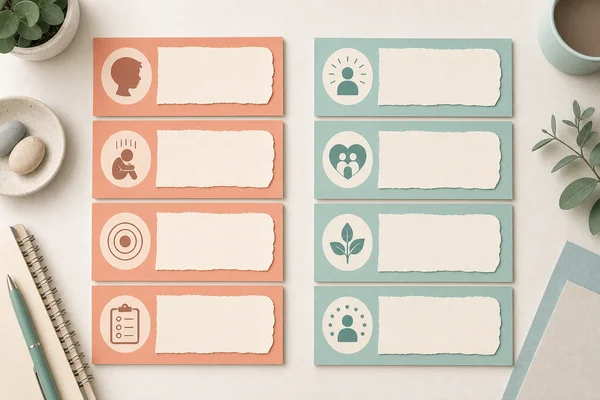
Old Autism Spectrum Disorder Types and What They Mean Today
Historical autism spectrum disorder types can still be helpful if you are trying to understand an older report, a family story, or a school record. The key is to translate them into current language without assuming that a label tells the whole person.
| Older term | What it generally described | How to understand it now |
|---|---|---|
| Autistic disorder or classic autism | More visible social communication, language, sensory, or repetitive-behavior differences | Usually understood within ASD, with support needs described more specifically |
| Asperger's syndrome | Autistic traits without major early language delay, often with average or above-average cognitive skills | Usually understood within ASD, often near Level 1 support language, but needs can still be significant |
| PDD-NOS | Clear autistic traits that did not fit another old category neatly | Usually understood as part of the broader spectrum when ASD criteria are met |
| Childhood disintegrative disorder | Typical early development followed by major skill loss in early childhood | A rare historical label that requires careful professional evaluation |
| Rett syndrome | Developmental regression, often affecting movement and communication, commonly linked to MECP2 gene changes | A distinct genetic condition, not simply a type of autism |
This translation matters because old labels can imply a false hierarchy. For example, Asperger's syndrome is sometimes treated as "mild autism," yet many people associated with that label still need support with sensory regulation, executive functioning, social communication, anxiety, burnout, or daily routines. Likewise, someone with limited speech may have rich understanding, preferences, humor, and strengths that are missed if people focus only on speech.
Current ASD Support Levels
If you are comparing autism spectrum disorder types, the current support-level framework is often more relevant than old subtype names. Support levels try to describe how much help someone may need, especially in social communication and restricted or repetitive patterns of behavior. For private reflection, an ASD self-reflection tool can help organize trait patterns before a conversation with a qualified professional.
Level 1 means the person requires support. They may speak fluently, study or work independently, and still struggle with social nuance, transitions, sensory overload, planning, or masking. Their needs may be underestimated because they appear capable in short interactions.
Level 2 means the person requires substantial support. Communication differences, rigidity, sensory distress, or difficulty shifting attention may be more noticeable even with support in place. The person may benefit from more structured routines, visual supports, direct communication, therapy, school accommodations, workplace adjustments, or caregiver assistance.
Level 3 means the person requires very substantial support. Communication may be limited or highly individualized, and repetitive behaviors, sensory needs, or distress around change may strongly affect daily life. This level does not mean a person lacks understanding or value. It means the environment and support plan need to be more intensive, respectful, and consistent.
The levels are useful only when they lead to better support. They should not be used to rank autistic people or predict someone's future with certainty.
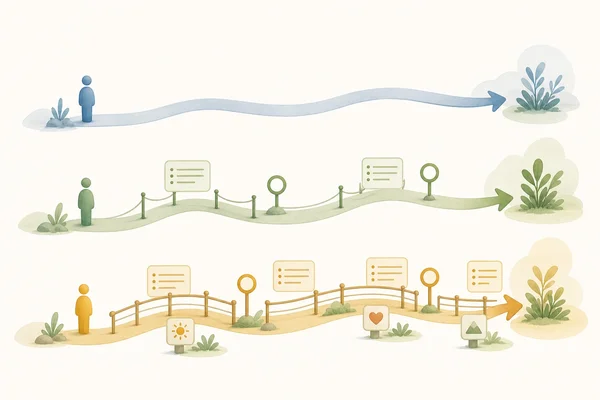
Traits Matter More Than Type Names
A better question than "Which type is this?" is "What support does this person need in this context?" Autism is not a straight line from less autistic to more autistic. It is a profile. Someone may need little support with vocabulary but major support with sensory overload. Another person may have strong visual reasoning and need substantial help with daily transitions. Someone else may communicate best through typing, pictures, gestures, or assisted communication.
Use this quick trait map when old labels feel confusing:
- Social communication: conversation flow, nonverbal cues, friendships, social energy, literal language, or direct communication preferences.
- Repetitive patterns and routines: intense interests, repeated movements, sameness, transitions, planning, or distress when expectations change.
- Sensory profile: sound, light, texture, smell, pain, temperature, movement, food, clothing, or crowded environments.
- Language and communication: spoken language, processing speed, AAC, scripting, selective speech, or difficulty explaining needs under stress.
- Daily-life support: school, work, hygiene, sleep, meals, transportation, money, safety, self-advocacy, and emotional regulation.
- Strengths and preferences: memory, pattern recognition, honesty, focus, creativity, deep interests, fairness, visual thinking, or technical skill.
This approach is also more humane. It makes room for autistic strengths without ignoring challenges. It also avoids the trap of assuming that one label explains every need.
Rare Types, Genetic Conditions, and Co-occurring Differences
Searches for rare types of autism often point to conditions that overlap with autism rather than official ASD subtypes. Childhood disintegrative disorder is rare and historically important. Rett syndrome is rare and genetically distinct. Neurofibromatosis type 1, fragile X syndrome, tuberous sclerosis complex, ADHD, anxiety, intellectual disability, language disorder, and epilepsy may also appear in conversations about autism because they can co-occur or share developmental features.
The main takeaway is that a related condition is not automatically a type of autism. For example, neurofibromatosis type 1 and autism spectrum disorder can be discussed together because some people with NF1 also have autistic traits or ASD. But NF1 is a genetic condition, not an autism subtype. The same logic applies to many syndromic or medical conditions that may affect development.
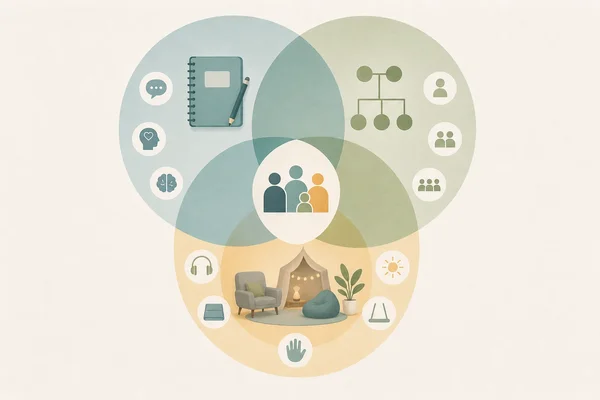
If a person has regression, seizures, sudden skill loss, unusual movement changes, significant sleep disruption, or a complex medical history, that calls for timely professional guidance. An online article can help you learn vocabulary, but it should not be used to sort complex medical questions on its own.
A Practical Way to Use Autism Disorders Types
The most practical use of autism disorders types is not to place someone in a rigid box. It is to ask better questions. Which traits are present? Which environments make life easier or harder? Which supports reduce distress? Which strengths should be protected? Which concerns deserve a professional conversation?
You can also make a simple one-page note before seeking support:
- List the traits you notice, with concrete examples.
- Mark when they appear: early childhood, school, work, relationships, sensory-heavy places, or transitions.
- Note strengths alongside challenges.
- Write down supports that already help, such as routines, quiet space, direct instructions, visual schedules, AAC, movement breaks, or predictable plans.
- Bring the notes to a qualified clinician, school team, therapist, or support professional when needed.
If you want a private educational starting point, the Autism Spectrum Test resource can help organize reflections before a next-step conversation. Treat any result as information for learning, not as a final answer about who someone is.
FAQ
How many types of autism are there?
In current language, autism is usually described as one autism spectrum disorder rather than several official types. Older labels still appear, and support levels may be described as Level 1, Level 2, and Level 3. That is why search results can give different numbers.
What are the 3 main types of autism?
The "3 main types" usually refers to the three ASD support levels: Level 1, Level 2, and Level 3. These describe broad support needs, not personality categories or fixed life outcomes.
What are the 4 types of autism?
The "4 types" usually refers to older DSM-IV-era categories: autistic disorder, Asperger's disorder, PDD-NOS, and childhood disintegrative disorder. Current language generally groups these under autism spectrum disorder when ASD criteria are met.
What is Asperger's syndrome?
Asperger's syndrome is an older autism-related label often associated with autistic traits without major early language delay. Many people still identify with the term, but current clinical language usually places it under autism spectrum disorder.
What is the high functioning autism group?
"High functioning autism" is an informal phrase, not a precise current category. It often points to people with lower visible support needs or fluent speech, but it can hide real struggles. More specific language, such as support needs, sensory needs, communication needs, and daily-life needs, is usually clearer.
What billionaire has Asperger's?
Elon Musk publicly said during a Saturday Night Live appearance that he has Asperger's syndrome. Public examples can raise awareness, but they should not define what autism looks like for everyone. Autistic people vary widely in communication, support needs, strengths, work life, and daily experience.
What type of disorder is autism?
Autism spectrum disorder is generally described as a neurodevelopmental disorder and developmental disability. It affects communication, interaction, behavior, learning, sensory processing, and daily support needs in different ways for different people.