Is Covering Ears a Sign of Autism: Understanding the Behavior
As a parent, noticing a new or unusual behavior in your child can instantly trigger a wave of worry. Perhaps you were at a birthday party when the singing started, or maybe you were just vacuuming the living room, and suddenly, your child’s hands flew to their ears. Now, you find yourself searching late at night, asking the big question: is covering ears a sign of autism?
You are not alone in this anxiety. While covering ears is indeed a recognized "red flag" for autism spectrum disorder (ASD), it is far from a definitive diagnosis on its own. Many children cover their ears for reasons ranging from simple curiosity to temporary ear infections.
This guide will help you decode your child's sensory signals. We will explore the common causes behind this behavior, help you distinguish between typical development and potential neurodivergence, and provide actionable steps to help your child cope. Before jumping to conclusions, it is helpful to explore our comprehensive autism spectrum test to understand the broader context of these traits.
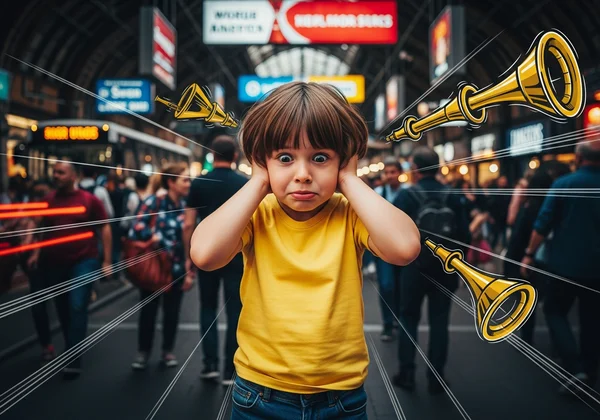
The Short Answer: Is It Always Autism?
The short answer is no. While is covering ears a sign of autism is a valid question, this behavior is not exclusive to the spectrum. In fact, many neurotypical children go through phases where they cover their ears.
For toddlers, the world is an incredibly loud place. Their auditory system is still developing, and they may not yet have the language to say, "That is too loud." Consequently, using their hands becomes a quick, effective tool to control their environment.
Understanding Hyperacusis (Sound Sensitivity)
Some children experience hyperacusis, a condition where everyday sounds—like a dog barking or a toilet flushing—seem painfully loud. This is a physiological sensitivity, not necessarily a neurological disorder. A child with hyperacusis might cover their ears to block out physical pain, rather than because they are overwhelmed by social or cognitive demands.
Developmental Phases vs. Persistent Traits
It is also vital to distinguish between a passing phase and a persistent trait. A child covering ears with hands not autism related might do so only when a fire truck passes by. This is a specific reaction to an extreme stimulus. However, if the behavior persists across many environments—even quiet ones—or interferes with daily life, it warrants a closer look.
Beyond the Spectrum: 4 Common Reasons Why Children Cover Their Ears
To truly understand is covering ears a sign of autism in your specific situation, you need to look at the "why." Often, the root cause is distinct from ASD. Here are four common explanations.
1. Sensory Overload (The "Too Much" Factor)
This is the most common link to autism, but it also affects children with Sensory Processing Disorder (SPD). When a child experiences sensory overload, their brain cannot filter the influx of sights, sounds, and textures. The noise of a grocery store might feel like a physical attack. Covering their ears is an instinctual attempt to "turn down the volume" of the world.
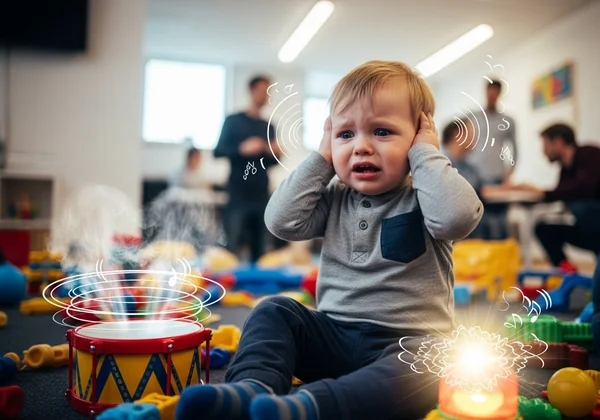
2. "For No Reason": Internal Regulation & Anticipation
Parents often search for answers when a toddler covers ears for no reason. The room is silent, yet their hands are up.
In these cases, the "reason" might be internal.
- Anticipation: The child knows the blender is about to start and is protecting themselves in advance.
- Internal Regulation: The sensation of pressure against the ears can be soothing. This isn't always about blocking sound; sometimes, it is about the comforting feeling of the hands themselves.
3. Physical Pain & Medical Causes
Before looking at neurological causes, rule out the physical ones. Ear infections are rampant in toddlerhood. Fluid buildup behind the eardrum creates pressure that can be painful or simply annoying. A child might cover or tug at their ears to alleviate this pressure. If your child also has a fever or has been congested recently, a trip to the pediatrician is your first step.
4. Emotional Regulation & Anxiety
Is your toddler covering ears when upset? Often, this is an emotional response rather than a sensory one. When a child is crying or having a tantrum, their own internal noise can be overwhelming. Furthermore, if they are being scolded or are in a high-stress situation, they might cover their ears to "shut out" the conflict. This is a coping mechanism for anxiety, signaling, "I need a break."
Red Flags: When Ear Covering Might Indicate Autism
So, when should you worry? When does a quirk become a symptom? Child covering ears with hands autism signs usually appear as a cluster of behaviors, not just one isolated act.
Frequency, Duration, and Intensity
Pay attention to the pattern.
- Frequency: Does it happen multiple times a day?
- Duration: Do they keep their ears covered for minutes at a time, even after the sound stops?
- Intensity: Is the reaction disproportionate? For example, screaming in terror at the sound of gentle rain.
The "Context Check": A Symptom Comparison Guide
Use this table to help differentiate between typical sensory sensitivity and potential autism traits.
| Behavior Context | Likely Neurotypical / Medical | Potential Autism Sign (Red Flag) |
|---|---|---|
| Reaction to Loud Noise | Covers ears for fireworks or sirens (extreme noise). | Covers ears for vacuum, hand dryer, or humming (everyday noise). |
| Social Interaction | Covers ears when being scolded or during a fight. | Covers ears when people sing "Happy Birthday" or clap. |
| Communication | Looks at you and says "Too loud!" or points to ears. | Covers ears without looking at you; unable to communicate the distress. |
| Recovery | Recovers quickly once the noise stops. | Remains upset or shuts down (meltdown) long after the noise ends. |
Looking for Co-occurring Traits
If you are asking is covering ears a sign of autism, look for other puzzle pieces. Does your child also struggle with eye contact? Do they have delayed speech? Do they engage in repetitive movements (rocking, flapping)? The presence of these co-occurring traits strongly increases the likelihood of ASD. You can learn more about these patterns by taking our online autism quiz, which is designed to spot these specific clusters.

Autism vs. ADHD: Distinguishing Sensory Responses
It is easy to confuse conditions. A common follow-up question parents have is: is covering ears a sign of ADHD?
The answer is complicated because ADHD and Autism often overlap. However, the motivation is usually different.
- ADHD: A child may cover their ears because they cannot focus. The background noise is too distracting, and they are trying to force their brain to concentrate on a task.
- Autism: The child covers their ears because the noise is physically painful or overwhelming to their nervous system.
Note: If you are unsure whether your child’s struggles are due to a lack of focus (ADHD) or sensory overwhelm (Autism), remember that you don't have to figure it out alone. Observation is key.
Connecting the Dots: How to Assess Your Child’s Sensory Profile
You have observed the behaviors. You have ruled out ear infections. You understand that is covering ears a sign of autism is a question of context, not just action. What is the next step?
Why Observation is the First Step
Documenting when and why your child covers their ears is the most valuable data you can give a professional. Keep a simple log for one week. Note the time, the trigger, and the recovery time.
Using Our Educational Screening Tool for Clarity
If your observation log reveals a pattern—especially if the ear covering is accompanied by social withdrawal or communication delays—it is time to dig deeper.
We have developed a specialized tool to help parents like you navigate this uncertainty. It is not a medical diagnosis, but a structured way to compare your child's behaviors against established spectrum traits.
Gain Insight into Your Child's Behavior
Are the signs pointing toward autism, ADHD, or sensory processing issues? Don't rely on guesswork. Our free, science-based assessment helps you identify your child's unique strengths and challenges.
Practical Strategies to Help Your Child Cope
Regardless of whether the cause is autism, ADHD, or simple sensitivity, your child is struggling in the moment. Here are three immediate ways to help them.
- Use Noise-Canceling Headphones: These are a game-changer for many families. They allow your child to participate in loud events (like school assemblies or fireworks) without pain. Keep a pair in your car and your bag.
- The Power of "Priming": Anxiety often worsens sensory issues. If you know a loud noise is coming (like a blender), warn your child first. Say, "I am going to turn on the blender in 3, 2, 1." This gives them control and allows them to cover their ears proactively.
- Create a Quiet "Safe Zone": Designate a specific spot in your house—a corner with pillows or a small tent—as a "Quiet Zone." Teach your child that they can go there whenever the world feels too loud. This empowers them to self-regulate rather than melting down.
Moving Forward with Confidence
So, is covering ears a sign of autism? It can be, but it is just one line in a much longer story. It is a sign that your child is sensitive to their environment and is communicating a need for protection.
Trust your instincts. If the behavior feels intense or is paired with other developmental delays, seeking clarity is the most loving thing you can do. By using resources like our autism spectrum test, you are taking proactive steps to understand the world through your child's eyes. Early understanding leads to better support, and better support leads to a happier, more confident child.
Frequently Asked Questions
Is covering ears while sleeping a sign of autism?
It can be, but it is rare. Usually, if a child covers their ears while sleeping, it indicates extreme sensitivity to ambient noise (like the hum of a refrigerator) or a need for the comforting pressure of their hands against their head.
Is ear covering considered a form of "Stimming"?
Yes, it can be. Stimming (self-stimulatory behavior) is used to regulate sensory input. Covering ears can block out overwhelming input (auditory) while providing soothing input (tactile pressure), serving a dual purpose for autistic children.
Should I stop my child from covering their ears?
No. Covering their ears is a coping mechanism. If you stop them, you remove their shield against pain or overwhelm, which often leads to a meltdown. Instead, try to reduce the noise or provide headphones.
At what age does ear-covering behavior typically start?
Sensory sensitivities can appear in infancy, but ear covering as a deliberate action typically starts in the toddler years (ages 18 months to 3 years) as motor skills improve and children become more aware of their environment.