What Does It Mean to Be on the Spectrum?
If someone says they are “on the spectrum,” they usually mean they are autistic or have been identified with autism spectrum disorder, often shortened to ASD. The phrase can feel confusing because spectrum sounds wide, flexible, and sometimes casual. In autism, though, it does not mean a simple line from “a little autistic” to “very autistic.” It means autism can involve different patterns of social communication, sensory experience, routines, interests, learning, and support needs. If you are trying to understand yourself or someone you care about, an autism spectrum screening resource can be a gentle starting point for reflection, while a qualified professional is still the right person for formal assessment and care decisions.
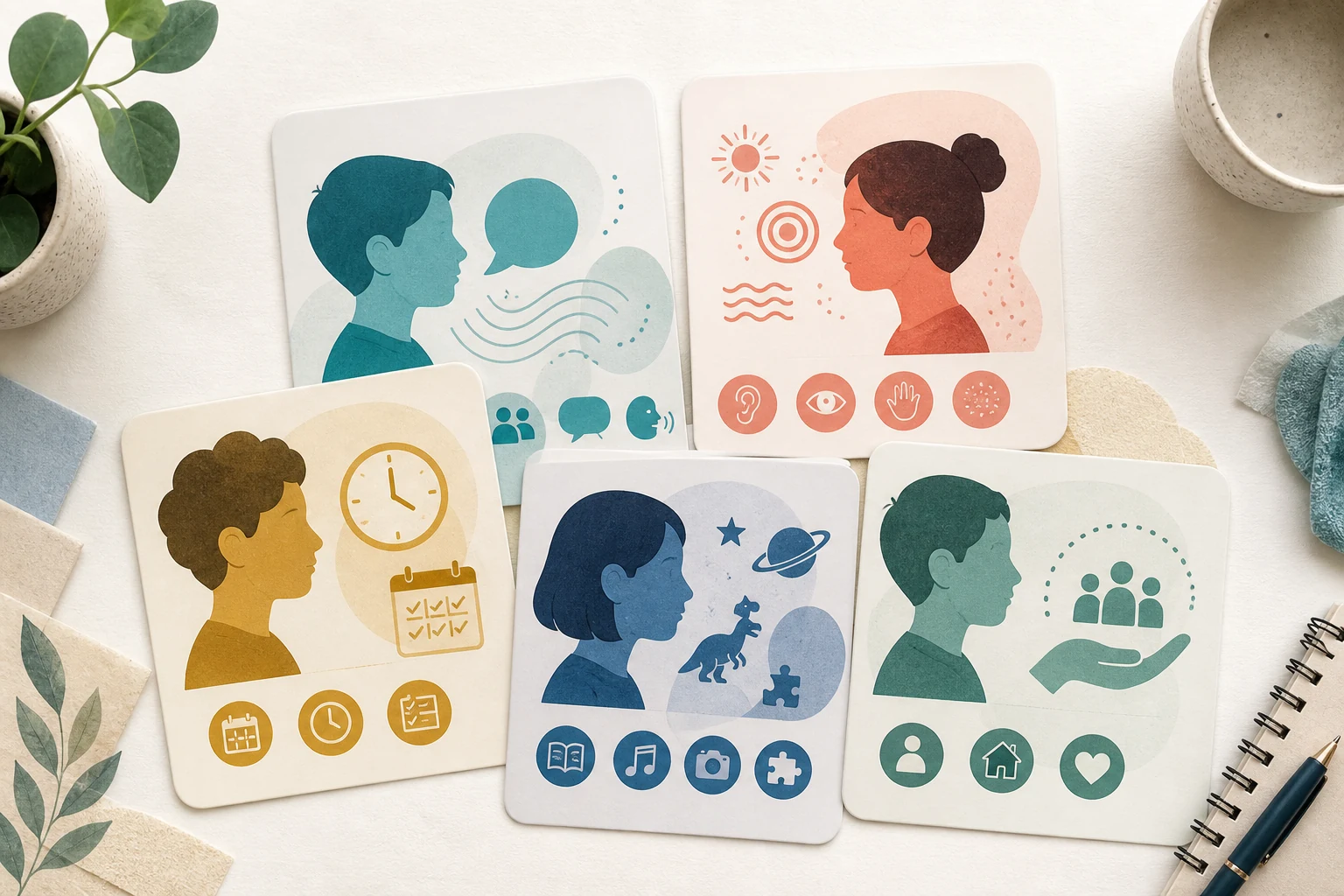
“On the Spectrum” Means a Pattern, Not a Single Score
The autism spectrum describes a range of autistic traits and support needs. Two people can both be on the spectrum and have very different daily experiences. One person may speak fluently, work independently, and still find social timing, sensory overload, or sudden changes exhausting. Another may need significant support with communication, safety, learning, or everyday routines. Both experiences can belong under the same broad term because autism is defined by a pattern of traits, not by one behavior or one level of ability.
This is why the phrase spectrum is useful when used carefully. It reminds us that autism can look different across age, gender, culture, language, personality, and environment. It also helps explain why older labels such as Asperger syndrome are now generally included under autism spectrum disorder in many current clinical frameworks. Some people still use older terms for personal or historical reasons, but the broader category is ASD.
At the same time, spectrum should not be used so loosely that it loses meaning. Everyone has preferences, social strengths and weaknesses, sensory likes and dislikes, and habits. ASD refers to a developmental pattern that is persistent, starts early in life even if it is recognized later, and affects daily functioning in meaningful ways.
Autism Spectrum Disorder Meaning in Plain English
Autism spectrum disorder is a neurodevelopmental difference related to how a person communicates, interacts, processes sensory information, manages change, and engages with interests or routines. In plain English, ASD is not a personality type, a temporary mood, or a single “symptom.” It is a pattern that affects how someone experiences the world and how the world responds to them.
Current descriptions of ASD usually emphasize two core areas. The first is social communication and interaction. This may include differences in conversation flow, eye contact, facial expression, relationship-building, interpreting social cues, or sharing interests in expected ways. The second is restricted or repetitive behaviors, interests, or sensory patterns. This may include strong routines, intense interests, repeated movements, distress around changes, or unusual sensitivity to sound, light, textures, smells, taste, or touch.
People often ask about “the three main symptoms of autism.” A careful answer is that many educational lists group signs into three practical buckets: social communication differences, repetitive or routine-based patterns, and sensory or developmental differences. Formal criteria, however, usually focus on the two core domains above, with sensory differences included under restricted and repetitive patterns. That distinction matters because a checklist can help you notice patterns, but it cannot settle what those patterns mean for a specific person.
Can You Be on the Spectrum but Not Autistic?
In everyday conversation, “on the spectrum” usually means “on the autism spectrum,” so it generally points to autism or ASD. But people sometimes use the phrase in a looser way, such as “I have some spectrum traits” or “I relate to autistic experiences.” That can be a valid self-reflection, but it is not the same as having an ASD identification from a professional evaluation.
It is possible to have some autistic traits without meeting the full criteria for ASD. For example, someone may strongly prefer routines, dislike certain sensory input, or find small talk tiring, yet not have the broader developmental pattern or daily-life impact associated with ASD. Some families also talk about a broader autism phenotype, meaning subclinical traits that can appear among relatives of autistic people. That language can be useful for understanding patterns, but it should be handled gently.
A better question than “Am I on the spectrum or not?” is often: “What patterns am I noticing, how long have they been present, and where do they affect daily life?” If those patterns are causing distress, school or work barriers, relationship strain, burnout, or safety concerns, it may be worth discussing them with a qualified clinician. If you are still in the early reflection stage, an AQ-style autism self-reflection tool can help organize observations before a conversation with a professional.

What Does “On the Spectrum” Mean in Adults?
For adults, being on the spectrum can mean the traits were always present but were missed, misunderstood, hidden, or explained in other ways. Some adults grew up before autism was widely recognized outside narrow childhood stereotypes. Others learned to mask, which means consciously or unconsciously copying social behavior, suppressing visible stimming, forcing eye contact, rehearsing conversations, or pushing through sensory discomfort to appear “fine.”
Adult autism can show up as long-term social exhaustion, difficulty reading indirect expectations, intense focus on specific interests, strong need for routine, sensory overload, or a history of feeling out of step with peers. Some adults have successful careers and relationships while still needing accommodations, recovery time, predictable systems, or clearer communication. Autism is not measured by whether someone “looks autistic” to others.
This is also why adults may feel a mix of relief, grief, uncertainty, or caution when they first encounter the phrase on the spectrum. The words can connect many old memories, but they can also raise new questions. A balanced approach is to collect examples from childhood and adulthood, notice strengths as well as challenges, and avoid rushing from one online description to a final identity decision.
Does “On the Spectrum” Mean ADHD?
No. In autism-related searches, “on the spectrum” usually refers to autism spectrum disorder, not ADHD. ADHD is a separate neurodevelopmental condition involving attention regulation, impulsivity, activity level, planning, and executive function. Autism and ADHD can overlap in daily life, and some people have both. They can also be mistaken for each other when the surface behavior looks similar.
For example, sensory overload can look like inattention. A deep autistic interest can look like hyperfocus. Difficulty with transitions can be related to routine needs, executive function, anxiety, sensory load, or several things at once. Social difficulty can come from autism, ADHD, social anxiety, language differences, trauma, lack of fit with an environment, or another explanation.
The useful move is not to force every sign into one label. Instead, look for patterns across settings: communication, sensory processing, routines, attention, emotional regulation, sleep, relationships, school, work, and daily responsibilities. The more complete the pattern, the easier it becomes to choose the next kind of support.
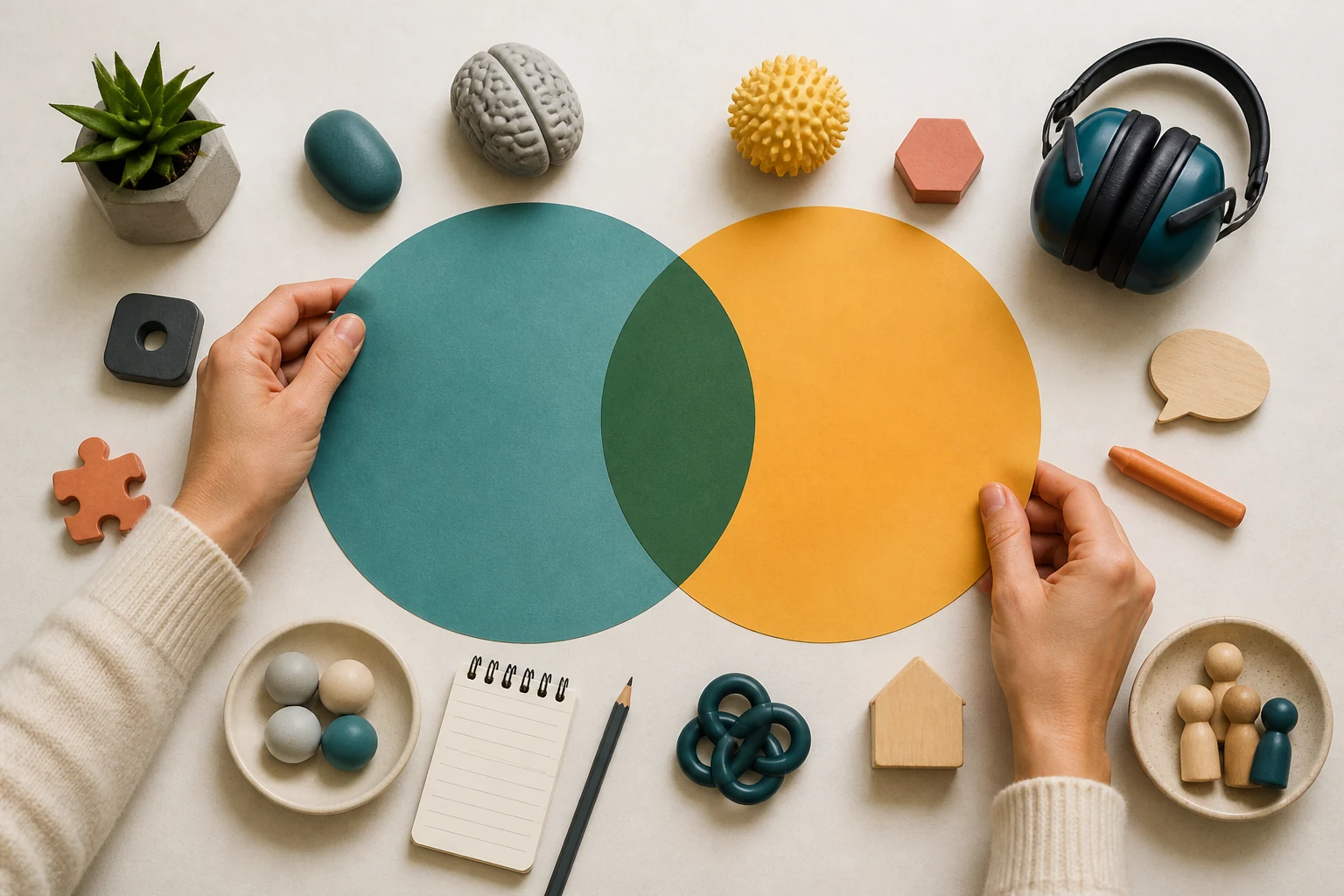
Signs That May Suggest Autism Spectrum Traits
No single sign proves someone is autistic. Still, recurring patterns can be worth noting, especially when they have been present for years or appear across different settings. Common autism spectrum traits may include:
- Finding unspoken social rules difficult to read or tiring to maintain.
- Feeling more comfortable with direct, literal, or clearly structured communication.
- Having strong interests that bring focus, joy, expertise, or a sense of order.
- Relying on routines and feeling distressed when plans change suddenly.
- Experiencing sound, light, clothing textures, food textures, smells, or crowds more intensely than other people seem to.
- Repeating movements, phrases, sounds, or routines to regulate energy or emotion.
- Needing more recovery time after social events, travel, noise, or unexpected demands.
- Having a long history of feeling different without knowing why.
In children, signs may include differences in responding to name, pointing, pretend play, shared attention, language development, repetitive play, sensory responses, or distress around transitions. In adults, the same underlying traits may appear more subtle because of learned coping strategies. The key is the overall pattern, not whether a person matches a stereotype.

A Gentle Way to Think About Next Steps
If the phrase “on the spectrum” feels personally relevant, start with observation rather than pressure. Write down what you notice in daily life: communication patterns, sensory needs, routines, strengths, stress points, childhood clues, and situations where support would make life easier. Include what helps, not only what is hard. This keeps the process grounded and less fear-driven.
Then consider context. Are these traits causing burnout, conflict, shutdowns, missed opportunities, school concerns, work barriers, or family stress? Are there co-occurring concerns such as anxiety, ADHD-like attention patterns, sleep difficulty, learning differences, or trauma history? These details can help a professional understand the full picture.
If you want a private first step, you can explore autism spectrum traits through a screening-style questionnaire and use the results as a conversation aid. Screening can support self-understanding, but it should not replace professional guidance when decisions about care, school support, workplace accommodations, or a child’s development are involved.
Using the Phrase “On the Spectrum” Respectfully
Language matters because people are listening from different places. Some people prefer “autistic person.” Others prefer “person with autism.” Some use “on the spectrum” because it feels softer or more private. The most respectful choice is often to use the language a person uses for themselves.
It also helps to avoid using “on the spectrum” as a joke, insult, or vague label for awkwardness. Autism is not the same as being shy, quirky, rude, brilliant, antisocial, or socially anxious, although an autistic person may also be any of those things because autistic people are still full people with varied personalities. The phrase should point toward understanding and support, not a shortcut for judging someone.
The clearest takeaway is this: what does it mean to be on the spectrum? It means a person may have an autism-related developmental pattern involving communication, sensory processing, routines, interests, and support needs. The pattern can look very different from person to person. A thoughtful autism spectrum learning tool can help you reflect, and a qualified professional can help when the question affects care, support, school, work, or wellbeing.

FAQ
Can you be on the spectrum and not have autism?
If the phrase means “on the autism spectrum,” it usually refers to autism or ASD. However, a person can have some autistic traits without meeting the full criteria for ASD. In that case, it is clearer to say “autistic traits” or “traits associated with autism” unless a professional has identified ASD.
How do I know if I am on the spectrum?
Look for long-term patterns across communication, sensory experience, routines, interests, and daily functioning. Childhood clues can matter, even if the traits became more visible in adulthood. A screening questionnaire may help organize your thoughts, but a professional assessment is the right path if the question affects care or major life decisions.
What are signs of autism in adults?
Adult signs can include social exhaustion, difficulty reading indirect cues, sensory overload, strong routines, intense interests, repeated self-regulating behaviors, and a long history of feeling different. Some adults mask these traits, so they may not be obvious to others.
Does on the spectrum mean ADHD?
No. “On the spectrum” usually means the autism spectrum. ADHD is separate, although autism and ADHD can overlap or co-occur. Similar-looking behaviors can have different reasons, so the broader pattern matters.
What does autism spectrum disorder mean?
Autism spectrum disorder means a neurodevelopmental pattern involving social communication differences and restricted, repetitive, or sensory-related patterns. The word spectrum reflects variation in traits and support needs, not a simple ranking from mild to severe.
Is autism a disability?
Autism can be a disability, especially when sensory, communication, learning, safety, or daily-living needs create barriers. It can also involve strengths, identity, and different ways of thinking. The impact varies widely, and support needs can change over time.
What causes autism spectrum disorder?
Autism does not have one single known cause. Research points to complex genetic, biological, and environmental influences on early brain development. It is not caused by parenting style, personality weakness, or a person choosing to behave differently.